How do I know if my refrigerator water line is actually leaking?
The clearest signs are not always at the fridge itself. You might notice the floor in front of the unit feels soft or springs back when you step on it. The grout line between tiles may darken. Laminate planks lift at the seams. In Alexandria homes with hardwood, you will often see cupping along the edges of boards within three to six feet of the appliance. If you have a finished basement, look at the ceiling directly below the kitchen for a yellow ring or sagging drywall.
Pull the fridge out about a foot and shine a flashlight on the copper or plastic line running to the back. Check the shut-off valve under the sink or in the basement. A failing valve weeps slowly at the packing nut. The line itself most often fails at the compression fitting behind the unit, where vibration and decades of slight movement loosen the seal. A pinhole in plastic tubing can release a gallon a day without ever creating a puddle you can see.
Why is hidden damage so much worse than what I can see?
Water follows gravity and capillary action. From behind the fridge, it runs under the cabinet base, soaks the particleboard toe-kick, wicks up the back of the lower cabinets, and saturates the subfloor. From there it migrates along floor joists. In a typical Alexandria two-story or ranch with a basement, we routinely find water staining three to fifteen feet from the original leak point. The visible wet spot might be twelve inches across. The actual affected area is often a six-by-eight foot rectangle.
The slow nature of the leak is what makes it dangerous. Fast leaks dry out as soon as they stop. Slow leaks keep materials at 18 to 30 percent moisture content for weeks or months, which is the exact range mold needs to colonize. Our moisture meters regularly show readings of 25 to 40 percent in subfloors that look perfectly normal from above. For a deeper look at how this works in wall cavities, our guide on water damage behind walls and hidden leak detection covers the same diagnostic approach we use behind appliances.
Can I dry this out myself with fans and a dehumidifier?
For a leak you caught within a few hours, sometimes yes. Box fans and a quality dehumidifier running for three to five days can handle a small surface event. The problem is that homeowner equipment cannot reach the moisture trapped under cabinets, inside the subfloor, or in the cavity between the kitchen floor and a basement ceiling. We use injection drying systems, low-profile air movers that slide under toe-kicks, and commercial dehumidifiers that pull 70 to 130 pints a day. Our process for emergency situations is detailed in our water mitigation and emergency drying overview, and the equipment difference is significant.
If your moisture meter readings (or ours) stay above 16 percent in wood materials after 48 hours of drying, you are not winning the fight with consumer gear. At that point the cabinet kick plates need to come off, holes get drilled through the toe-kicks for airflow, and sometimes a section of flooring has to be lifted to dry the subfloor from below. Even rental dehumidifiers from a hardware store top out around 50 pints per day in real-world conditions, which is roughly half what we need for a saturated kitchen footprint. Running the wrong size unit for a week just keeps the materials in the danger zone longer.
Which Alexandria Water Restoration refrigerators are most likely to develop line leaks?
Any brand with an icemaker or water dispenser is a candidate, but the failure point is almost always the same regardless of Alexandria Water Restoration. The plastic quarter-inch tubing that came with the appliance starts to harden and crack between years seven and twelve. The saddle valve installed by a previous homeowner on the copper supply line corrodes from the inside. The compression fitting at the back of the fridge loosens every time the unit is pulled out for cleaning or floor work. We recommend replacing the supply line with braided stainless steel any time a fridge is moved, and replacing saddle valves with a proper quarter-turn ball valve. That single upgrade prevents more leaks than any other step we can suggest to Alexandria homeowners.
What does refrigerator leak restoration usually cost in Alexandria?
Small jobs caught early run $800 to $1,800 for professional drying and minor material removal. Mid-range jobs with subfloor damage, cabinet kick replacement, and partial flooring repair fall between $2,500 and $6,500. Larger jobs that include hardwood replacement, basement ceiling repair, and mold remediation can reach $8,000 to $15,000 or more. A sudden, accidental discharge from a refrigerator line is typically covered by homeowners insurance in Alexandria, while slow long-term leaks are sometimes denied. We document the failure point carefully so the claim reflects what actually happened.
The age of the supply line matters for coverage too. Adjusters increasingly ask whether the line was original to the appliance or a recent replacement. If you have receipts for plumbing work, dig them out before the inspection. We have seen claims approved on borderline cases simply because the homeowner could show the line was less than a year old at the time of failure.
How long does the full repair take from start to finish?
Mitigation drying takes three to five days for most Alexandria fridge leaks. Demolition of damaged materials adds one to two days. Rebuild (flooring, cabinets, drywall, paint) typically runs one to three weeks depending on material lead times and the size of the affected area. We stage the work so you can keep using your kitchen as much as possible, and we coordinate with your adjuster throughout the process. If cabinets need to be ordered to match an older style, expect the rebuild phase to stretch closer to four weeks, and ask early about temporary fillers so the kitchen remains functional in the meantime.
When does mold become part of the conversation?
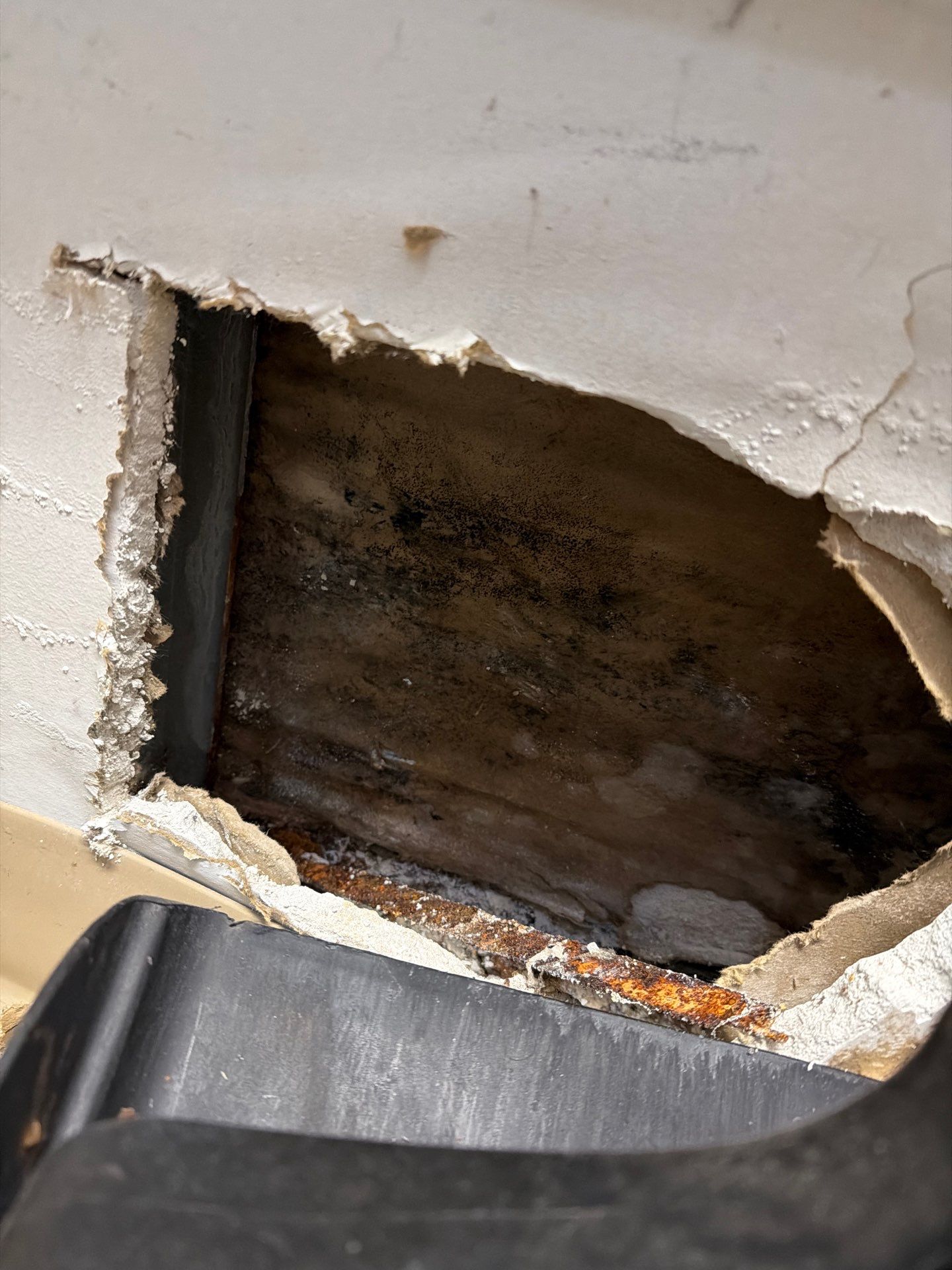
Mold needs moisture, organic material, and time. Refrigerator leaks supply all three. If the leak has been active for more than 14 days, assume some level of microbial growth is present in the affected materials. Particleboard cabinet bases are especially vulnerable because the glue and pressed wood absorb water and hold it. If you see black, gray, or greenish staining when we pull the toe-kicks, we shift into containment protocols. The repair stops being a drying job and becomes a remediation job, which changes the scope, the timeline, and the insurance language.
What should I do in the first hour after finding the leak?
Shut off the water to the fridge. The valve is usually under the kitchen sink, in the basement directly below the fridge, or at the main if you cannot locate the local stop. Unplug the appliance. Pull it forward gently so you do not tear the line further. Lay towels down and use a wet vacuum on any standing water you can reach. Do not move the fridge across wet flooring if you can avoid it, because rolling pressure can drive water deeper into the seams.
Take photos before you do any cleanup. Insurance adjusters want to see the original condition, the leak source, and the surrounding materials. Open the cabinets next to the fridge and check the back walls and floor of each one. If you smell anything musty, that is mold getting started, and the timeline gets shorter.